
December through February is peak booking season for most Australian Airbnb listings — school holidays, summer travel, and warmer weather all line up at once. It’s also the season with the highest guest expectations and the most that can go wrong: cooling failures, pool/outdoor area issues, and reviews that mention heat far more than any other complaint in summer months.
Now, before the peak actually hits, is the right window to prepare — not in the middle of a heatwave with a guest already checked in.
Cooling: The Single Biggest Summer Complaint Risk
If your listing doesn’t have reliable air conditioning, this is the most important item on the list, full stop. A guest arriving to a hot, stuffy property in January is one of the fastest paths to a bad review, regardless of how nice everything else is.
- Test any existing air conditioning now, not on the day of your first summer booking — a unit that’s been idle since last autumn can fail on first use
- If there’s no split system, provide a genuine cooling solution, not just a standing fan — see our comparison of fans, evaporative coolers, and portable air conditioners for what actually works for different room sizes
- Check and clean any exhaust/vent components on portable units — a blocked vent significantly reduces cooling performance right when it matters most
Outdoor and Shared Areas
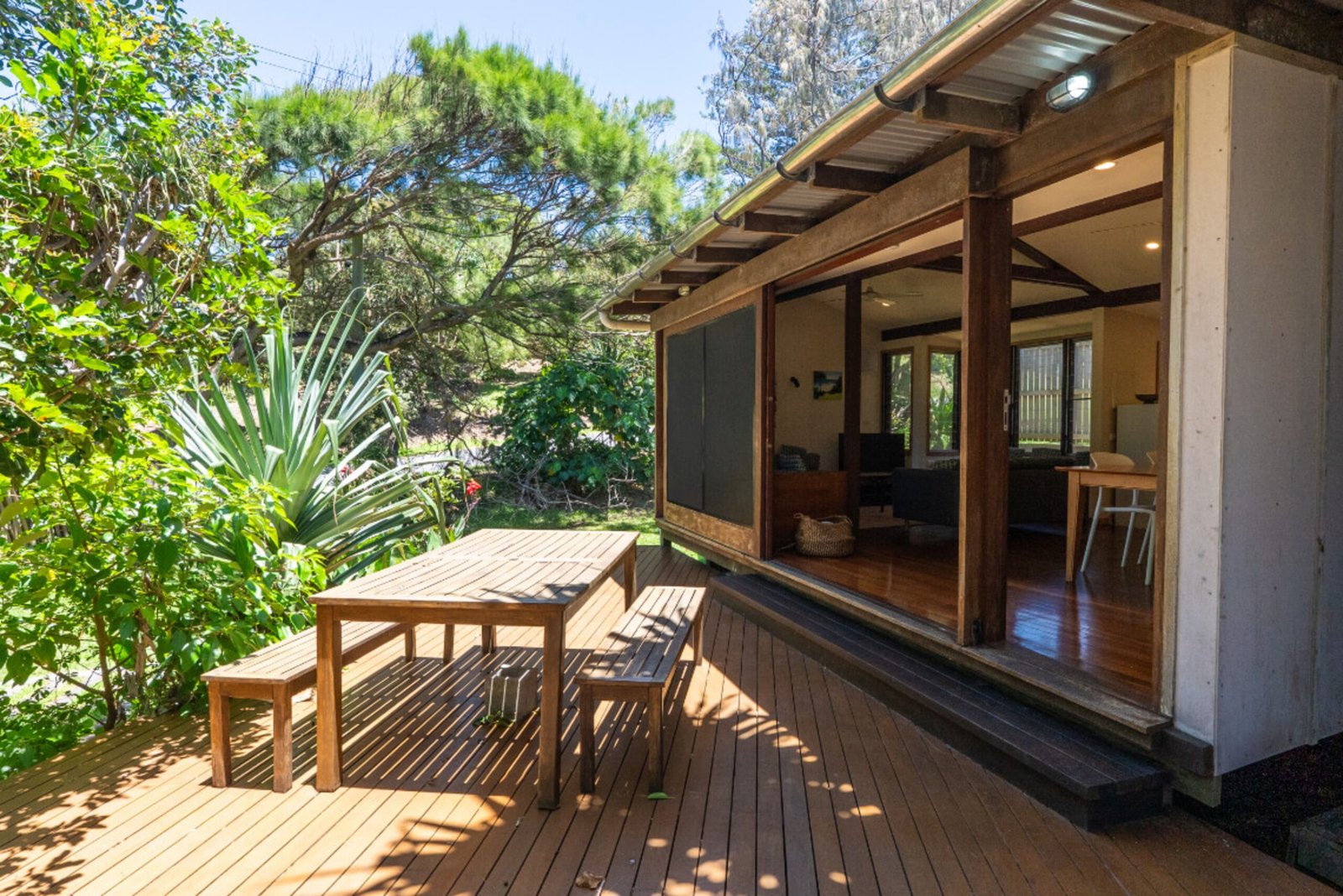
If your listing has any outdoor space — balcony, courtyard, shared pool access — summer is when guests actually use it, so it needs to hold up to scrutiny it didn’t get in cooler months.
- Check outdoor furniture for sun damage from the previous season — cracked plastic, faded cushions, or rusted fittings are far more noticeable to a summer guest actually sitting outside
- Provide shade if the outdoor area gets full sun — even a simple umbrella changes whether the space is usable at all during the day
- If there’s pool or water access, confirm current safety signage and fencing compliance — this is also a period when local councils tend to increase compliance checks
Update Your Listing Photos and Description for the Season
Guests booking in spring for a summer stay are evaluating the property against what they’ll actually experience — a listing with only winter photos undersells a property’s actual summer appeal (or hides a cooling problem you should fix rather than hide).
- Add photos that show the space in bright, natural light
- If you have outdoor areas, photograph them styled and ready for summer use
- Update your listing description to mention specific cooling arrangements — guests actively search for and ask about this in summer, and stating it upfront reduces pre-booking questions
Restock and Refresh Guest Supplies for the Season
A few supply changes make sense specifically for summer bookings:
- Extra drinking water on hand, especially for properties without easy walking access to shops
- Sunscreen and insect repellent as a small welcome touch — genuinely appreciated and inexpensive to provide
- Lighter bedding options alongside your standard set, since heavier winter bedding left as the only option gets used anyway and leads to uncomfortable, hot sleep — see our Airbnb cleaning checklist for keeping linen turnover consistent through a busier season
- A functioning fan in every bedroom, even if there’s central cooling — many guests prefer airflow directly on them at night regardless of room temperature
Adjust Your Turnover Process for a Busier Season
Summer often means more back-to-back, same-day bookings than the rest of the year:
- Confirm your cleaner’s availability for the full peak period in advance — this is when cleaners are busiest across every listing in your area, not just yours
- Build in slightly more buffer time between checkout and check-in if possible, since summer turnovers (sweaty linens, sandy floors from beach-adjacent stays) often take longer than a standard clean
- Double-check your air conditioning reset routine is part of the actual cleaning checklist — a unit left on the wrong setting or a filter that needs clearing is easy to miss under time pressure
Review Your Pricing for Peak Season
If you haven’t already, revisit pricing specifically for December–February — see our Airbnb pricing guide for the underlying strategy, but the seasonal-specific point is: peak season pricing should already be set before the booking window opens, not adjusted reactively once bookings start rolling in below what the season could support.
A Pre-Summer Checklist
- Test all air conditioning / cooling now, not on first summer booking
- Inspect and refresh outdoor furniture and shade
- Confirm pool/water safety compliance if applicable
- Update listing photos to reflect summer conditions
- Add a line to your description about cooling arrangements
- Stock lighter bedding alongside standard sets
- Confirm cleaner availability across the full peak period
- Set peak-season pricing before the booking window opens, not after
The Bottom Line
Most summer Airbnb complaints in Australia trace back to the same handful of preventable issues — heat, tired outdoor furniture, and turnover processes that weren’t built for a busier season. Spending an afternoon now, before the first heatwave and the first fully booked week, is far cheaper than losing a booking or a star rating mid-season.
Hosting through your first Australian summer, or a seasoned host with a prep routine that works? Share what you do differently for summer bookings in the comments.